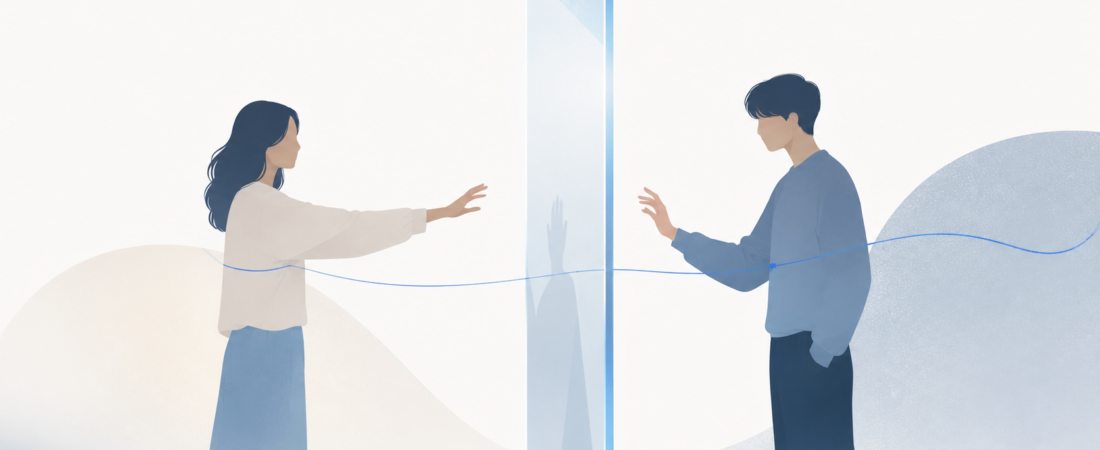
Understanding Avoidant Attachment Styles
Welcome back!
In Part 1, we explored secure and anxious attachment styles. If you find yourself constantly checking your phone, worrying when someone takes too long to reply, or fearing that every disagreement means the relationship is over, you may relate to an anxious attachment style.
But what about the person on the other side of the conversation?
The one who seemed deeply interested at first…
Only to suddenly say,
“I just need some space.”
Today, we’re exploring the other side of the attachment spectrum—the attachment styles that often leave people feeling confused, rejected, and wondering what went wrong.
Dismissive-Avoidant Attachment
“I don’t need anyone. My independence comes first.”
People with a dismissive-avoidant attachment style often place a high value on independence and personal freedom.
For some, emotional closeness can begin to feel overwhelming as a relationship becomes more serious.
Signs
As intimacy grows, they may start taking much longer to reply to messages, cancel plans at the last minute, or become emotionally distant without clearly explaining why.
This doesn’t necessarily mean they no longer care—it may simply be their way of creating emotional distance when they begin to feel overwhelmed.
The Hidden Trap
Avoidant individuals don’t necessarily want less love.
In many cases, they simply experience closeness differently.
For some people, deeper intimacy can feel like losing personal freedom or control, causing them to instinctively pull away.
When an anxious partner seeks more reassurance, the avoidant partner may withdraw even further—creating the familiar cycle of one person chasing while the other keeps running.
Fearful-Avoidant Attachment
“Come closer… No, please stay away.”
Also known as disorganized attachment, this is often considered the most complex attachment style.
People with this attachment pattern usually crave deep emotional connection while simultaneously fearing rejection, abandonment, or emotional pain.
Signs
One day they may seem incredibly warm, affectionate, and emotionally open.
The next day, they may become distant, cold, or disappear without explanation.
These sudden emotional shifts can leave their partners feeling confused and emotionally exhausted.
The Hidden Trap
Many people with fearful-avoidant attachment carry a deep fear that the people they love will eventually leave them or hurt them.
Because of this fear, some may push others away before they have the chance to get hurt.
Although painful, this can become a form of self-protection rather than a lack of love.
Breaking the Cycle
Secure. Anxious. Dismissive-Avoidant. Fearful-Avoidant.
Which attachment style sounds most like you—or someone you’ve loved?
The most important thing to remember is that attachment styles are not permanent labels.
They are patterns that often develop through early life experiences and relationships, and they can change over time through self-awareness, healthy relationships, and personal growth.
Understanding your relationship patterns isn’t about blaming yourself.
It’s about taking the first step toward building healthier, more secure connections.
Have you ever dated someone who always seemed to pull away just as the relationship became serious?
Share your experience in the comments—we’d love to hear your story.
Sources
- Bowlby, J. (1969). Attachment and Loss.
- Ainsworth, M. D. S. (1978). Patterns of Attachment.
- Mikulincer, M., & Shaver, P. R. (2016). Attachment in Adulthood.